Season 1
Episodes • 1972

1. 1972: Lord Annan - What are Universities for, Anyway?
45 minNo description available.
▶ Watch Episode2. 1973: Sir Robert Mark - Minority Verdict
45 minSir Robert Mark, Britain's top policeman, tonight critically examines our system of justice. He takes a fresh look at the role of the police in our society, and outspokenly declares his own beliefs about the state of law and order today. Introduced by David Dimbleby
▶ Watch Episode4. 1975: Sir Huw Wheldon - The British Experience in Television
45 minFormer managing director of BBC television, Sir Huw Wheldon, gives a lecture before a specially invited audience at BBC Television Centre.
▶ Watch Episode5. 1976: Lord Hailsham - Elective Dictatorship
45 minDavid Dimbleby introduces Lord Hailsham's lecture, in which he proposes a written constitution for the UK to limit the powers of parliament and provide a system of checks and balances.
▶ Watch Episode7. 1978: Lord Rothschild - Risk
45 minThe Chairman of the BBC, Sir Michael Swann, introduces the Richard Dimbleby Lecture, in which Lord Rothschild discusses the assessment and acceptibility of risks.
▶ Watch Episode8. Roy Jenkins - Home Thoughts from Abroad
45 minThe Rt Hon Roy Jenkins, President of the European Commission and formerly Home Secretary, and Deputy Leader of the Labour Party, gives the eighth in this annual series of lectures. 'As a forum of national debate, the House of Commons has declined. The great clashes of party principle and the conflicting convictions of major personalities have mostly given way to a sterile exchange of unconvincing slogans and mutual recrimination, to a background of unedifying noise. Roy Jenkins examines the present state of the British political system. He questions whether our traditional stability has now turned into rigidity, and asks how we could improve the form and content of our politics.
▶ Watch Episode14. 1986: Sir John Harvey-Jones - Does Industry Matter?
45 minNo description available.
▶ Watch Episode15. 1987: Sir Denis Forman - British Television: Who are the Masters Now?
45 minNo description available.
▶ Watch Episode16. 1988: Sir George Porter - Knowledge Itself is Power
45 minNo description available.
▶ Watch Episode19. 1992: Lord Taylor of Gosforth - The Judiciary in the Nineties
45 minNo description available.
▶ Watch Episode20. 1994: Stella Rimington - Security and Democracy - Is There a Conflict?
45 minJonathan Dimbleby introduces the 20th annual lecture as Stella Rimington, the Director General of the Security Service, sheds light on the workings and basic remit of MI5.
▶ Watch Episode21. 1996: Richard Dawkins - Science, Delusion and the Appetite for Wonder
45 minIn his role as the Charles Simonyi Professor For The Understanding Of Science at Oxford University, Dawkins regularly talks to the public regarding his views on the wonders of science. Several weeks ago, on November 12th, 1996, he delievered the Richard Dimbleby Lecture on BBC1 Television in England, entitled "Science, Delusion and the Appetite for Wonder.
▶ Watch Episode24. 1999: Susan Greenfield - The Future Could be Too Much Fun
45 minNo description available.
▶ Watch Episode25. 2000: Sir Nicholas Serota - Who's Afraid of Modern Art
45 minNo description available.
▶ Watch Episode26. 2001: Bill Clinton - The Struggle For The Soul of The 21st Century
45 minNo description available.
▶ Watch Episode27. 2002: Dr Rowan Williams - Nations, Markets and Morals
45 minNo description available.
▶ Watch Episode28. 2003: Dominique de Villepin - The path towards a new world
45 minNo description available.
▶ Watch Episode30. Stella Rimington: Security and Democracy - Is There a Conflict?
45 minJonathan Dimbleby introduces the 20th annual lecture as Stella Rimington, the Director General of the Security Service, sheds light on the workings and basic remit of MI5.
▶ Watch Episode31. General Sir Mike Jackson: Defence of the Realm in the 21st Century
45 minGeneral Sir Mike Jackson gives the 31st Richard Dimbleby Lecture. The man who led Britain's soldiers through conflicts in Iraq and Afghanistan talks publicly for the first time since leaving the Army. Speaking from the Regimental Headquarters of the London Scottish Regiment, General Jackson examines The Defence of the Realm in the 21st Century.
▶ Watch Episode32. Dr J Craig Venter: A DNA-Driven World
45 minGene pioneer Dr. J. Craig Venter gives the 32nd Richard Dimbleby Lecture. One of the principal scientists who decoded the human genome is about to create the first artificial life form on Earth.
▶ Watch Episode
33. His Royal Highness The Prince of Wales: Facing the Future
45 minHis Royal Highness The Prince of Wales gives The Richard Dimbleby Lecture from St James's Palace in London. The heir to the throne has become well-known for identifying key issues ahead of mainstream public thinking, such as encouraging organic food production or emphasising the importance of inter-faith dialogue. In this lecture, he sets out some of the serious challenges which the world faces, and explores how some of these issues could be tackled in the years ahead.
▶ Watch Episode
34. Sir Terry Pratchett: Shaking Hands with Death
45 minOne of the world's most popular authors gives the 34th Richard Dimbleby Lecture from the Royal College of Physicians in London. Sir Terry Pratchett announced in 2007 that he had been diagnosed with a rare form of early-onset Alzheimer's disease. In his keynote lecture, Shaking Hands with Death, he explores how modern society, confronted with an increasingly older population, many of whom will suffer from incurable illnesses, needs to redefine how it deals with death. The acclaimed creator of the bestselling Discworld series, he is the first novelist to give the Richard Dimbleby Lecture. His books have sold more than 65 million copies and have been translated into 37 languages.
▶ Watch Episode
35. Michael Morpurgo: Set Our Children Free
45 minIn this year's Richard Dimbleby Lecture, Michael Morpurgo explores the increasingly urgent issue of children's rights, and investigates the wrongs that young people have to endure. One of Britain's most popular children's authors, Morpurgo has written over 120 books and more recently he has become a campaigner on behalf of children, both at home and abroad. In this role he visited the Middle East where he witnessed, first hand, the difficulties children face in times of conflict. His most well known book, War Horse, was recently dramatised to great critical acclaim and it is now being made into a Hollywood feature film by Stephen Spielberg.
▶ Watch Episode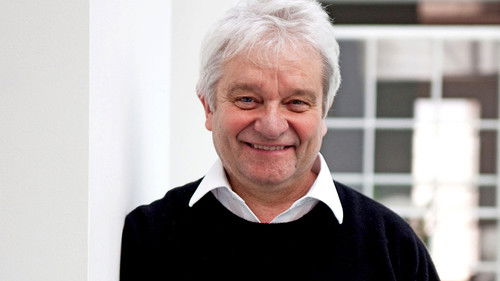
36. Sir Paul Nurse: The Wonder of Science
45 minIn the 2012 Richard Dimbleby Lecture, leading geneticist and Nobel laureate Sir Paul Nurse explores the wonder of science and how it enhances our culture and civilisation. He investigates how science can not only help solve the world's big problems, but also be harnessed to improve health and quality of life. One of Britain's most eminent scientists, Sir Paul is the president of the Royal Society and chief executive of the UK Centre for Medical Research and Innovation.
▶ Watch Episode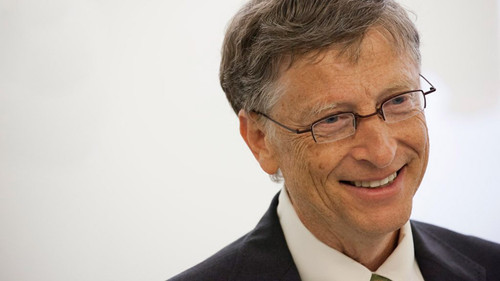
37. Bill Gates: The Impatient Optimist
45 minIn the 2013 Richard Dimbleby Lecture, one of the world's greatest entrepreneurs and leading philanthropists, Bill Gates, explains his optimism for a world free of the debilitating disease, polio. He explains why he is devoting so much of his time, money and influence to eradicating polio, and how we can all help to finish the job. Since the launch of the Bill and Melinda Gates Foundation, Bill Gates has become a leading figure on the international development stage, seeking innovative solutions to extreme poverty and poor health in developing countries.
▶ Watch Episode
38. Christine Lagarde: A New Multilateralism for the 21st Century
45 minChristine Lagarde, the first woman to head the International Monetary Fund, delivers the 2014 Richard Dimbleby Lecture. Charismatic and plain speaking, Lagarde explains her thinking on the challenges facing the global economy. Introduced by David Dimbleby from Guildhall in London.
▶ Watch Episode
39. Martha Lane Fox: Dot Everyone - Power, the Internet and You
45 minMartha Lane Fox, founder of lastminute.com, digital pioneer, baroness and chancellor of the Open University, delivers this year's Richard Dimbleby Lecture. She will challenge us all - leaders, legislators, and users - to understand the internet more deeply and to be curious and critical in our digital lives in order to tackle the most complex issues facing our society. Introduced by Jonathan Dimbleby, from the Science Museum in London.
▶ Watch Episode
40. Gregory Doran: Is Shakespeare Chinese?
45 minGregory Doran, artistic director of the RSC, who has been described as one of the 'great Shakespearians of his generation', delivers the 2016 Richard Dimbleby Lecture. Four hundred years after Shakespeare's death, Gregory reflects on the impact and resonance Shakespeare still has in the contemporary world. Introduced by David Dimbleby from the Shard.
▶ Watch Episode41. John O. Brennan: Staying Safe in a Turbulent World
45 minJohn O Brennan, former director of the Central Intelligence Agency, delivers the 2017 Richard Dimbleby Lecture. During his directorship, he was responsible for leading and managing intelligence collection, analysis, covert action and counterintelligence. He uses his extensive experience to assess the future prospects of security, stability and disruption in this time of global turbulence and challenge. Introduced by Jonathan Dimbleby.
▶ Watch Episode
42. Jeanette Winterson
45 minJeanette Winterson, award-winning writer and acclaimed author of Oranges Are Not the Only Fruit, delivers the 2018 Richard Dimbleby Lecture. 100 years on from the first women in the UK securing the right to vote, Jeanette asks what we can learn from the suffrage movement of a century ago, as well as examining the longevity of recent global campaigns promoting the equality of women. Introduced by David Dimbleby from the Palace of Westminster.
▶ Watch Episode43. Sir Tim Berners-Lee: The World Wide Web - A Mid-Course Correction
45 minBritish inventor Sir Tim Berners-Lee talks about his aspirations for the future of the World Wide Web, in 2019 its 30th anniversary year. The Fourth Industrial Revolution is well underway: the Internet of Things, AI and virtual reality are soon to be commonplace in our lives. Yet fewer women than men are online, more than half the world remains offline, and developing countries are missing out on revolutionary opportunities. Introduced by Richard’s son, Jonathan Dimbleby, from London’s Design Museum.
▶ Watch Episode44. Dame Sarah Gilbert: Vaccine Vs Virus: This Race - and the Next One
45 minProfessor Dame Sarah Gilbert delivers the 44th Richard Dimbleby lecture from Oxford, talking about creating a Covid-19 vaccine in less than a year. Sarah Gilbert is the Said Professor of Vaccinology in the Nuffield Department of Medicine at the University of Oxford. She works on vaccines for many different emerging pathogens and in 2020 led the development of a vaccine against the novel coronavirus, SARS-CoV-2, achieving emergency use approval in record time. The vaccine has now been used in more than 170 countries around the world after a groundbreaking partnership was formed between Oxford University and AstraZeneca. Introduced by Richard’s son, David Dimbleby.
▶ Watch Episode45. David Harewood: 75th anniversary of the Empire Windrush arriving in this country
minAcclaimed actor David Harewood OBE delivers the 2023 Richard Dimbleby Lecture. On the 75th anniversary of the Empire Windrush arriving in this country, David explores the challenges that were overcome by his parents' generation and considers their legacy through his own personal journey of self-identity, as well as how they have shaped and inspired a new generation.
▶ Watch Episode46. Sir Gareth Southgate: The Beautiful Game: Building Belief and Resilience in a Younger Generation
minFormer England football manager Sir Gareth Southgate delivers the 2025 Richard Dimbleby Lecture. Gareth reflects on his personal journey, what he has lived through and what he has learned as a leader. He will explore the concept of belief, examine the power of unity and highlight the importance of resilience, especially for young people in a fast-changing and challenging world.
▶ Watch Episode